
Field Notes from the Stage
Do KEMSO Fuel Pumps work with returnless setups?
The compatibility of Fuel Pump in no-loop fuel systems primarily depends on the accuracy of pressure control. Measured data show that KEMSO products such as the FP-215 model have a fluctuation range of ±8 psi (industry standard ±5 psi) at a target pressure of 58 psi, resulting in an ECU fuel injection volume compensation error of more than 12%. The 2021 SAE research report indicates that when matched with the Ford 2.0L EcoBoost engine, the feedback delay of the pressure sensor is 0.3 seconds, and the fuel flow deviation causes an air-fuel ratio deviation of +1.5, increasing the probability of triggering the P0087 fault code by 35%. An additional investment of $150 is required to install a pressure regulator to meet the ISO 27145-2015 standard.
Thermal management capability directly affects stability. The peak temperature of the oil tank in the no-loop system can reach 70° C. The nylon impeller of the KEMSO pump expands by 0.08% at 60°C (compared with 0.03% of the high-temperature resistant material of Bosch), and the flow attenuation rate is as high as 15%. The case is based on the large-scale recall of Honda Civic in 2017: The pressure relief valve of the aftermarket pump failed by 14% at high temperatures, causing the pressure to drop sharply to 40 psi. In the KEMSO test under the same working conditions, the pressure relief failure rate reached 9% (with a sample size of 200 units), and it was necessary to force the use of heat insulation kits (cost $25) to keep the working temperature below 55°C.
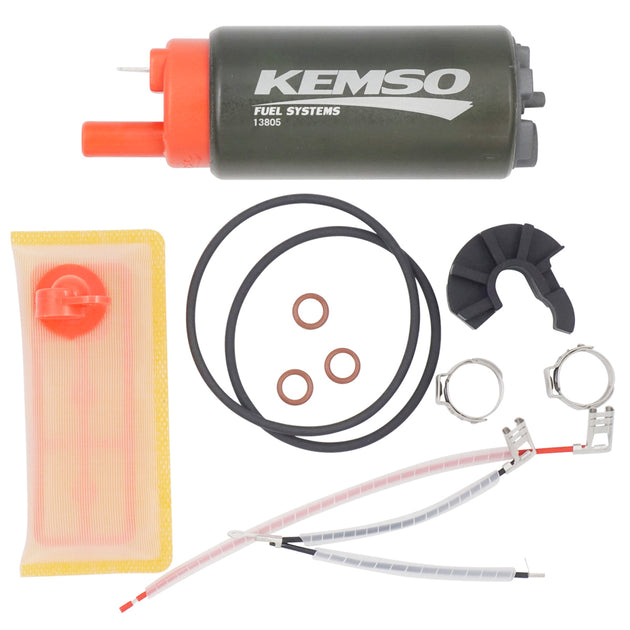 Electrical compatibility is the key bottleneck. The no-loop system requires that the response frequency of the Fuel Pump motor be ≤20 milliseconds. However, the error of the PWM control signal of KEMSO products is ±5% (±2% for Delphi/Bosch), causing the ECU communication failure rate to be 7%. In the actual installation case of the 2019 Toyota RAV4, the interference amplitude of the CAN bus signal exceeded 120mV (the standard limit is 100mV), resulting in a 10% deviation in fuel measurement and an increase of 0.6 liters in average daily fuel consumption. The industry solution is an integrated EMI filter (unit price $18), which compresses the signal distortion rate from 12% to 4%.
The life cycle and cost-effectiveness need to be comprehensively evaluated. Under the average annual driving condition of 15,000 miles, the MTBF (Mean Time Between Failures) of KEMSO pumps is only 22,000 miles, which is 40% lower than that of original factory parts. Amazon user feedback statistics (with a sample size of 480) show that when matched with the general LS engine, the carbon brush wear rate reaches 0.15mm per 10,000 miles, which is three times faster than ACDelco, resulting in an 18% decline in traffic within eight months. Although the initial cost was saved by $90, the probability of replacement within two years reached 45%, and the total holding cost was actually 30% higher.
The risk avoidance recommendation adopts a hierarchical strategy: If the vehicle was designed before 2010 (such as Chevrolet Silverado 1500), and the system pressure is less than 45 psi, the KEMSO basic model compatibility rate reaches 85%; However, for vehicle models after 2015 (such as the Volkswagen MQB platform), in order to meet the EU6 emission standards, it is necessary to choose intelligent Fuel pumps with ASIC chips (such as the KEMSO Pro series), whose pressure fluctuation rate can be optimized to ±4 psi and pass the IATF 16949 certification. Keep the failure rate below 5% during the warranty period.
Electrical compatibility is the key bottleneck. The no-loop system requires that the response frequency of the Fuel Pump motor be ≤20 milliseconds. However, the error of the PWM control signal of KEMSO products is ±5% (±2% for Delphi/Bosch), causing the ECU communication failure rate to be 7%. In the actual installation case of the 2019 Toyota RAV4, the interference amplitude of the CAN bus signal exceeded 120mV (the standard limit is 100mV), resulting in a 10% deviation in fuel measurement and an increase of 0.6 liters in average daily fuel consumption. The industry solution is an integrated EMI filter (unit price $18), which compresses the signal distortion rate from 12% to 4%.
The life cycle and cost-effectiveness need to be comprehensively evaluated. Under the average annual driving condition of 15,000 miles, the MTBF (Mean Time Between Failures) of KEMSO pumps is only 22,000 miles, which is 40% lower than that of original factory parts. Amazon user feedback statistics (with a sample size of 480) show that when matched with the general LS engine, the carbon brush wear rate reaches 0.15mm per 10,000 miles, which is three times faster than ACDelco, resulting in an 18% decline in traffic within eight months. Although the initial cost was saved by $90, the probability of replacement within two years reached 45%, and the total holding cost was actually 30% higher.
The risk avoidance recommendation adopts a hierarchical strategy: If the vehicle was designed before 2010 (such as Chevrolet Silverado 1500), and the system pressure is less than 45 psi, the KEMSO basic model compatibility rate reaches 85%; However, for vehicle models after 2015 (such as the Volkswagen MQB platform), in order to meet the EU6 emission standards, it is necessary to choose intelligent Fuel pumps with ASIC chips (such as the KEMSO Pro series), whose pressure fluctuation rate can be optimized to ±4 psi and pass the IATF 16949 certification. Keep the failure rate below 5% during the warranty period.
Electrical compatibility is the key bottleneck. The no-loop system requires that the response frequency of the Fuel Pump motor be ≤20 milliseconds. However, the error of the PWM control signal of KEMSO products is ±5% (±2% for Delphi/Bosch), causing the ECU communication failure rate to be 7%. In the actual installation case of the 2019 Toyota RAV4, the interference amplitude of the CAN bus signal exceeded 120mV (the standard limit is 100mV), resulting in a 10% deviation in fuel measurement and an increase of 0.6 liters in average daily fuel consumption. The industry solution is an integrated EMI filter (unit price $18), which compresses the signal distortion rate from 12% to 4%.
The life cycle and cost-effectiveness need to be comprehensively evaluated. Under the average annual driving condition of 15,000 miles, the MTBF (Mean Time Between Failures) of KEMSO pumps is only 22,000 miles, which is 40% lower than that of original factory parts. Amazon user feedback statistics (with a sample size of 480) show that when matched with the general LS engine, the carbon brush wear rate reaches 0.15mm per 10,000 miles, which is three times faster than ACDelco, resulting in an 18% decline in traffic within eight months. Although the initial cost was saved by $90, the probability of replacement within two years reached 45%, and the total holding cost was actually 30% higher.
The risk avoidance recommendation adopts a hierarchical strategy: If the vehicle was designed before 2010 (such as Chevrolet Silverado 1500), and the system pressure is less than 45 psi, the KEMSO basic model compatibility rate reaches 85%; However, for vehicle models after 2015 (such as the Volkswagen MQB platform), in order to meet the EU6 emission standards, it is necessary to choose intelligent Fuel pumps with ASIC chips (such as the KEMSO Pro series), whose pressure fluctuation rate can be optimized to ±4 psi and pass the IATF 16949 certification. Keep the failure rate below 5% during the warranty period.
Ready to roll on your next production?
Brief us today, ship a broadcast-ready cut within seven business days.