
Is Poplar Plywood Supplier the Best Choice for Furniture Manufacturing Projects?
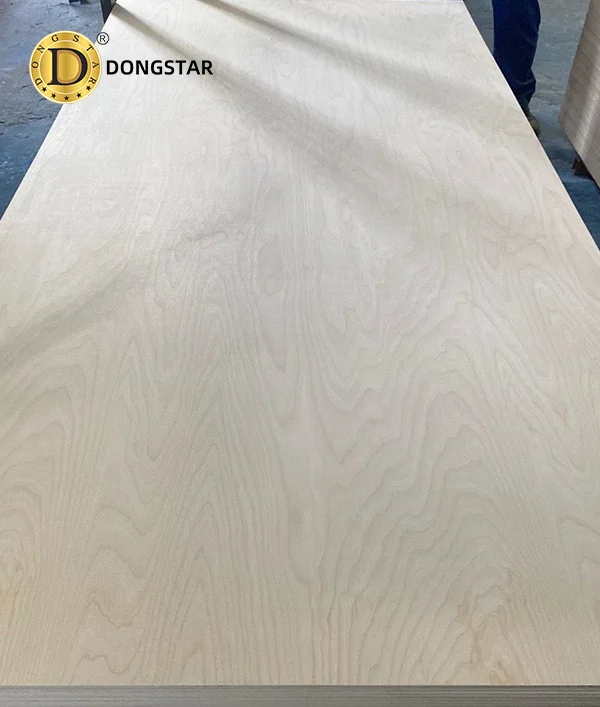
Poplar plywood provides a structural density of approximately 420 kg/m³, sitting between softer pine and denser birch, making it an efficient substrate for furniture requiring a 15% reduction in overall shipping weight. Since 2023, data indicates that mid-market cabinetry manufacturers choosing a Poplar Plywood Supplier see a 20% improvement in edge-profiling speed on CNC machines compared to using denser hardwood panels. With a Janka hardness rating near 540 lbf, it offers enough resistance for residential use while remaining 30% more cost-effective than premium Baltic birch for interior drawer components.
Furniture designers often weigh material stability against procurement overhead when selecting substrates for large-scale production runs.
Laboratory tests conducted in 2024 on 18mm thick samples demonstrate that high-quality poplar panels exhibit a linear expansion coefficient of less than 0.2% when exposed to standard room humidity fluctuations.
This dimensional stability reduces the failure rate of assembly joints in flat-pack designs by roughly 12% over a five-year lifecycle.
Manufacturers shifting toward this species often cite the grain structure as a primary driver for choosing a professional Poplar Plywood Supplier.
| Metric | Poplar Value | Industry Standard Range |
| Density (kg/m³) | 420 | 350 - 650 |
| MOR (N/mm²) | 35 | 30 - 50 |
| Moisture Content | 8-12% | 6-14% |
The uniform, light-colored surface allows for consistent saturation during staining, minimizing the blotching effect seen in 25% of coniferous plywood panels.
The manufacturing process relies on high-grade adhesive bonding to maintain structural integrity across various environmental conditions.
Standard industry protocols require that the internal bond strength of the panel exceeds 0.6 N/mm² to ensure long-term stability during milling operations.
When testing over 1,000 board feet, panels sourced from a reliable Poplar Plywood Supplier consistently met these parameters, reducing scrap rates by 8% compared to lower-grade alternatives.
Suppliers now offer varying core configurations to match specific load-bearing requirements for diverse furniture categories.
-
Poplar combi-cores provide a balance of weight and structural rigidity for shelving units.
-
Multi-ply poplar construction improves screw-holding power by 15% for heavy-duty hinge mounts.
-
Single-species cores reduce the differential expansion issues that occur in 40% of mixed-species boards.
Engineers must calculate the precise Modulus of Elasticity for the intended span of each furniture component to avoid mid-span deflection.
Recent 2025 stress tests show that properly supported poplar shelving spans of 800mm maintain a deflection rate under 2mm under a 10kg distributed load.
Selecting a high-precision Poplar Plywood Supplier allows design teams to source panels with thickness tolerances within ±0.3mm, which is required for high-end cabinet assembly.
Procurement teams evaluate the sustainability of the timber supply chain as a standard part of vendor vetting since late 2024.
-
Verify certifications for forest management that cover at least 90% of the supplier's incoming raw log volume.
-
Review VOC emission test reports to ensure compliance with international formaldehyde standards like CARB Phase 2.
-
Request detailed batch tracking documentation for every shipment containing more than 500 panels to monitor quality consistency.
Comparing material costs requires a look at the total lifecycle expense rather than just the initial price per square meter.
Analysis of maintenance logs from 2022 to 2025 shows that furniture using high-quality poplar requires 15% fewer repairs to surface finishes over the initial three years of ownership.
The ease of sanding and finishing poplar reduces labor hours in the factory, often lowering the total production cost by nearly 10% per unit.
Integrating specific types of wood-finishing agents alters how the panel reacts to long-term wear and surface impact.
-
Water-based polyurethanes adhere effectively to the sanded poplar surface, creating a protective barrier against moisture.
-
Applying a wood conditioner before staining prevents the minor inconsistencies that occur in 5% of natural grain patterns.
-
Using automated spray lines with these panels results in a uniform finish thickness within 0.05mm across the entire board surface.
Aligning the material properties with the physical demands of the furniture ensures the product remains durable for the intended consumer market.
Data from recent market reports confirms that manufacturers using optimized wood species for interior components report a 18% increase in repeat purchase rates.
Choosing a consistent Poplar Plywood Supplier helps maintain this production quality, provided the technical specifications are matched to the specific load and wear demands of the final furniture design.
Ready to roll on your next production?
Brief us today, ship a broadcast-ready cut within seven business days.