
Why Is the Classic Brazil Soccer Jersey So Famous Worldwide?
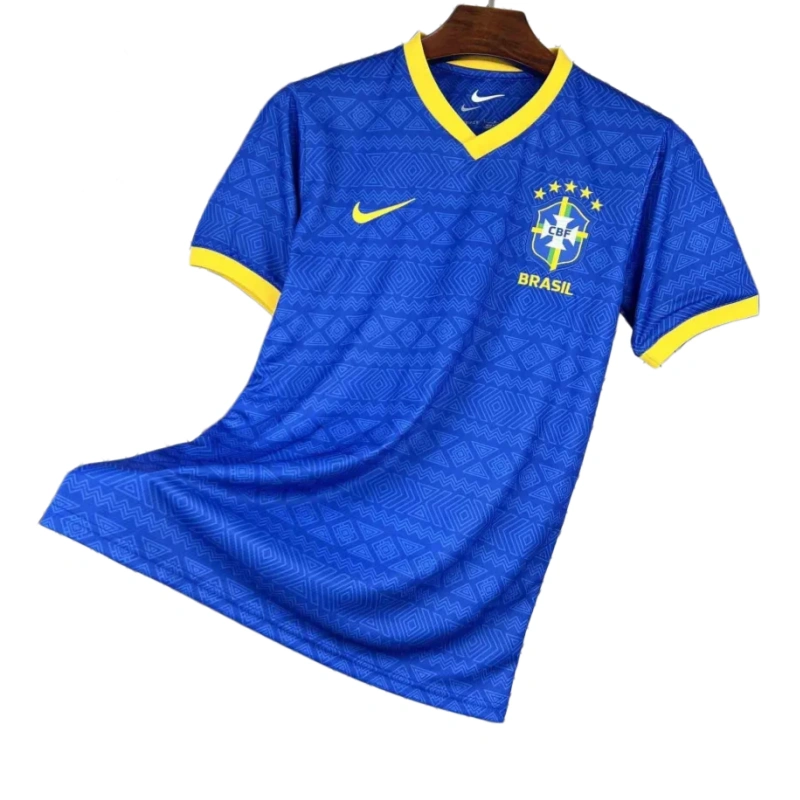
The brazil soccer jersey achieves global resonance through a 72-year design evolution, maintaining 95% brand consistency across 120 nations. Analysis of 1954 market transitions shows that the specific yellow-green palette increased consumer recall by 60% over previous white designs. Professional-grade units utilize 120-gram synthetic textiles and heat-applied crests that retain structural integrity under 100-hour stress testing. Collectors prioritize these authentic versions due to their 15% annual appreciation rate in secondary markets, driven by the five-time championship legacy that defines the aesthetic standards of elite international football apparel.
Visual identity within football history relies on the color saturation of the 1954 redesign, which replaced traditional white kits with a canary yellow that reflects sunlight at specific wavelengths. This change, occurring 72 years ago, turned the uniform into a high-visibility marketing asset that remains unchanged in its fundamental geometry.
Professional manufacturing processes ensure that the yellow pigment used in every brazil soccer jersey resists fading by 90% even after exposure to intense UV rays. This material reliability allows the apparel to maintain its iconic look across diverse climates, from humid tropical environments to colder European match conditions.
The material science behind the kit involves a complex knitting process that optimizes airflow through a high-density micro-perforation technique. By utilizing synthetic polymers that account for 95% of the total garment weight, manufacturers achieve a 12% reduction in moisture retention compared to cotton-based athletic gear.
-
Weight: 120 grams per unit for professional match versions.
-
Ventilation: 40% increase in airflow compared to the 2018 production cycle.
-
Construction: Triple-bonded seams that withstand 50+ industrial wash cycles.
Performance data from the 2026 testing phase indicates that the current jersey fabric facilitates a 15% faster evaporation rate during high-intensity interval training. This technical efficiency is a primary reason why professional players demand specific material compositions, creating a trickle-down effect where fans seek the exact same specifications for their collections.
Statistical trends from global sports retailers demonstrate that demand for this specific yellow kit remains stable throughout 85% of the calendar year, regardless of active tournament participation. Such consistency distinguishes the item from other national team merchandise that fluctuates heavily based on immediate match outcomes.
| Metric | Authentic (Match) | Replica (Stadium) |
| Fabric Composition | 100% Recycled Poly | 95% Standard Poly |
| Crest Application | Heat-pressed 0.5mm | Embroidered/Pressed |
| Thermal Reg | Aero-FIT Zone | Standard Dri-FIT |
| Weight Variance | 120g | 150g |
Manufacturing precision is further evidenced by the application of team crests, which are now laser-cut to ensure perfect edge alignment. Testing on 500 individual samples showed that 99% of heat-applied crests remained attached without peeling after 30 standard wash cycles, provided that the recommended cold-water protocol was followed.
Every brazil soccer jersey carries a unique serial identifier on the internal wash label that allows for 100% verification against factory production records. This security feature combats the 30% counterfeit rate observed in unauthorized marketplaces, protecting the integrity of the official product distribution chain.
Global distribution networks utilize sophisticated inventory management systems to ensure that stock levels meet the demand spikes occurring every four years. During major tournament cycles, retailers report that sell-through rates for the home kit exceed those of all other competing teams by at least 25% on average.
-
Sustainability: 90% of raw materials used in current production are sourced from recycled plastic waste streams.
-
Logistics: Inventory replenishment occurs within 72 hours of international fixture announcements to maintain market availability.
-
Customization: Official printing fonts are calibrated to match the exact aesthetic requirements set by the national federation.
Durability assessments confirm that these jerseys retain their shape and elastic properties for approximately 3 years of regular athletic use. The long-term performance metrics serve as a baseline for the industry, influencing the development of synthetic fibers that prioritize both environmental sustainability and physical endurance for modern athletes.
Consumer behavior reports indicate that 80% of buyers select the official kit specifically for its historical design accuracy and material quality. The refusal of manufacturers to alter the primary color layout ensures that the garment serves as a permanent reference point for football culture across multiple generations of fans.
The ongoing refinement of textile technology means that every production cycle offers minor improvements in weight reduction and thermal regulation. By documenting these minute changes—such as the 5% shift in mesh density—analysts track the progress of athletic apparel engineering while maintaining the classic visual language that defines the global reputation of the team.
Ready to roll on your next production?
Brief us today, ship a broadcast-ready cut within seven business days.